One house, many practices
NAGI Grace
Two resins and two kinds of light, which is most of what this tradition has burned for two thousand years.
The line
Everything in NAGI Grace
Sourcing
What this line is made of, and where it comes from
Two resins and two kinds of light, which is most of what this tradition has burned for two thousand years.
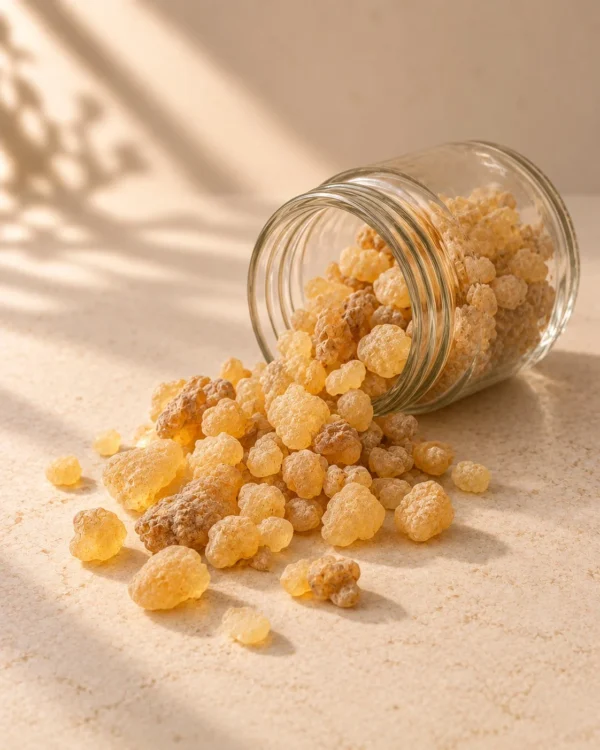
Frankincense and myrrh
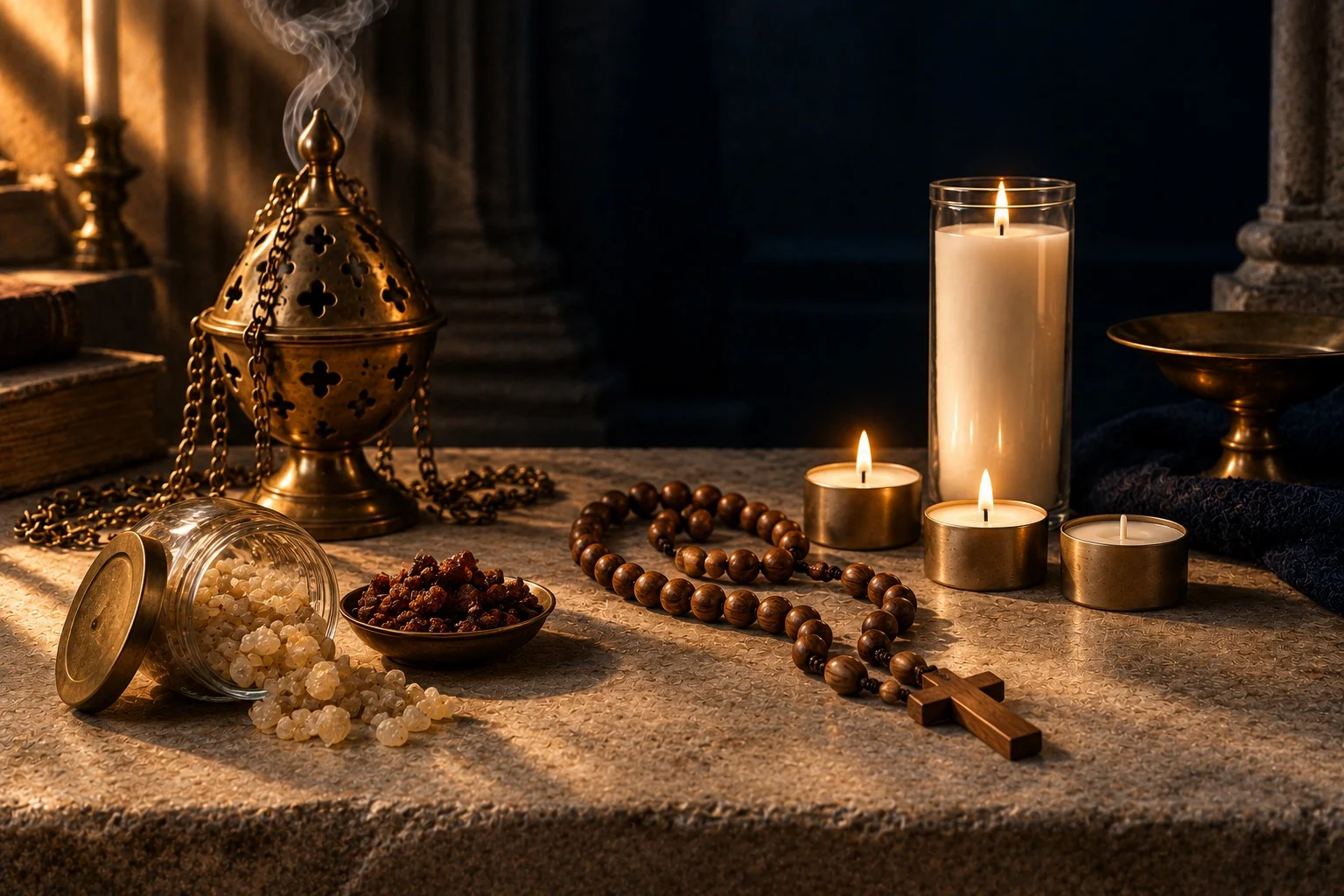
Boswellia from the Dhofar escarpment in Oman, hand-sorted rather than milled, so the jar holds whole tears. Commiphora myrrh from Somaliland, darker and harder, with a heavier and more bitter smoke. Both are burned the same way — a piece at a time on a lit charcoal disc in a censer with a sand or ash bed.
The starter set exists because buying loose resin usually means sourcing a burner, tongs, charcoal and resin from four different places, and because the ash bed is the step most people miss the first time.
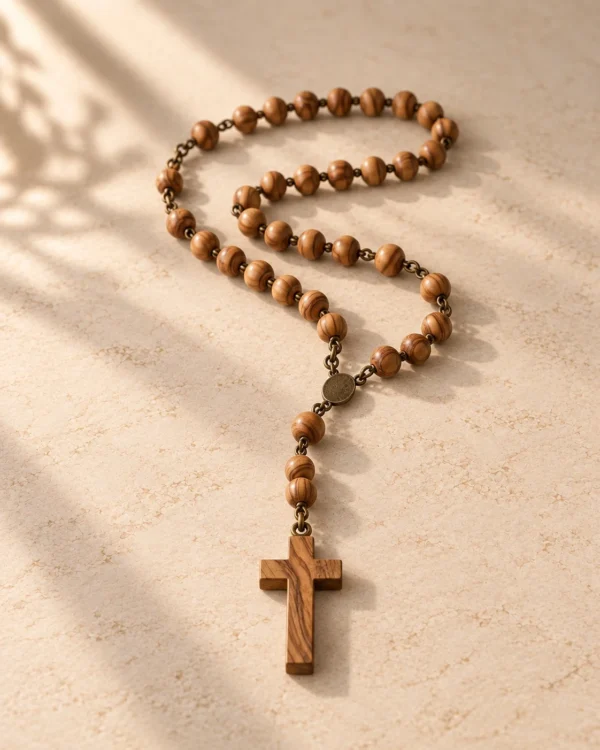
Rosaries
Full five-decade rosaries: fifty-nine beads, centrepiece and crucifix. Olive wood turned in the workshops around Bethlehem from pruned and fallen olive, and pressed garnet glass from Firozabad, which has run glass furnaces since the Mughal period. Both are linked on chain rather than strung, so a pulled link opens instead of scattering a decade across the floor.
Crucifixes are plain and unfigured. Nothing we ship has been blessed at our end — that belongs with your parish, not with a trading house.
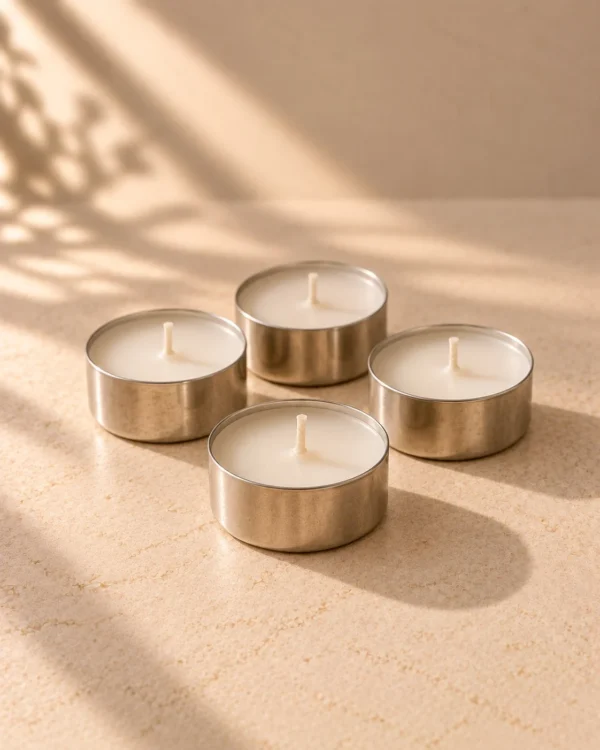
Votive and sanctuary candles
Unscented votives poured into their own cups, twenty-four to a box, about ten hours each — the candles lit at a prayer stand. And the tall seven-day glass, plain and undecorated, which turns out to be genuinely hard to buy: almost everything in that format carries printed imagery, and a lot of people want the glass without it.